1 Nov 2026
Out of Office Travel Expenses in 2026–27: What You Can Claim
Site visits, overnight stays and the records behind them. A plain-English look at out of office travel expenses in 2026–27 for Australian workers.
Working from home in 2026? See how the 70 cent fixed rate and actual expenses method work, what remote employees can claim, and the records to keep.
6 min read
🧮 Try our work from home calculator ↓
Working from home has settled into the shape of a normal Australian week. The tax side of it hasn't stayed still though, and the method you use decides how much paperwork sits behind your claim. Get it right and a few hundred hours at the kitchen table turns into money back at tax time. Get it sloppy and you can lose the whole deduction if the ATO asks questions.
The notes below cover how the rules sit for the 2025-26 income year, the one that ends on 30 June 2026. This is general information rather than tax advice, and the ATO is the final word on any individual claim.
For the 2024-25 and 2025-26 income years, the ATO allows employees to claim 70 cents per hour for each hour worked from home. This is the revised fixed cost method, and it replaced the 67 cents per hour rate that applied from 1 July 2022. It also replaced the temporary 80 cent shortcut method, which only ever covered part of the 2020 and 2021 returns.
The arithmetic is refreshingly simple. Hours worked from home multiplied by 70 cents. Twenty hours a week across 48 weeks is 960 hours, which works out to $672. Bump that to 38 hours a week over the same period and you're looking at roughly $1,277. Not life changing money, but it is yours if you can back it up with records.
| Method | Rate | When it applied |
|---|---|---|
| Shortcut method | 80 cents per hour | 1 March to 30 June 2020, and 1 July to 31 December 2020 |
| Revised fixed rate method | 67 cents per hour | From 1 July 2022 |
| Revised fixed rate method | 70 cents per hour | 2024-25 and 2025-26 income years |
The rate is built to cover the running costs of using your home for work. Electricity and gas for heating, cooling and lighting are the main ones. Rather than adding up quarterly bills and splitting them by floor space, you take a standard amount per hour worked and move on with your day.
That convenience cuts both ways. You don't have to apportion power bills, but you also shouldn't claim those same running costs a second time on top of the hourly rate. Pick one method per year and stick with it.

You can still claim your actual expenses instead of the hourly rate. Under this approach you work out the work-related portion of your running costs, then claim that portion. It also lets you claim depreciation of work-related equipment such as a chair, desk, monitor or laptop.
Actual expenses tends to win when you have a genuinely separate workspace, heavy energy use through summer or winter, or expensive gear you're depreciating across several years. The catch is that every number needs a trail behind it. You need the bills and a defensible basis for the work-use percentage, not a guess jotted down in July.
Home office deductions split into two broad families. Running expenses are what you incur while using your home office, such as power for the lights and the air conditioner, or depreciation on the equipment in the room.
Occupancy expenses relate to owning or renting the home itself. These are treated more strictly than running costs, and employees should confirm their position with the ATO or a registered tax agent before going near them. Getting this distinction wrong is one of the more expensive mistakes people make.
Home office equipment and furniture used for work that costs less than $300 can generally be deducted in full straight away in the year you buy it. Above that threshold, the cost is depreciated over the item's effective life instead. A cheap monitor arm disappears into this year's return. An expensive ergonomic chair gets spread out across several.
Keep the receipt for every one of these purchases. A photo of the invoice stored in your phone is fine, as long as it shows what you bought, the date, the amount, and how you worked out the work-related share if the item gets personal use too.
For the fixed rate, the record that matters most is your hours. The ATO wants to see that you actually worked from home, not that you were home with the laptop open while the kettle boiled. Reasonable evidence includes a roster, a diary, timesheets, or a simple log you update as you go rather than reconstruct in a panic the night before lodging.
Record keeping requirements do get updated, so it's worth checking the current ATO guidance for the income year you're lodging before you finalise anything.
The most common errors are small and avoidable. Claiming hours for days you were actually in the office is the big one, and it's easy for the ATO to spot when your employer's records don't line up with your log.
Other frequent missteps include using the 80 cent shortcut method for a year it no longer applies, claiming the fixed rate and then also claiming electricity separately, and lumping personal power use into the work share without any reasoning behind the split. Each of those turns a straightforward deduction into a conversation you'd rather not have.
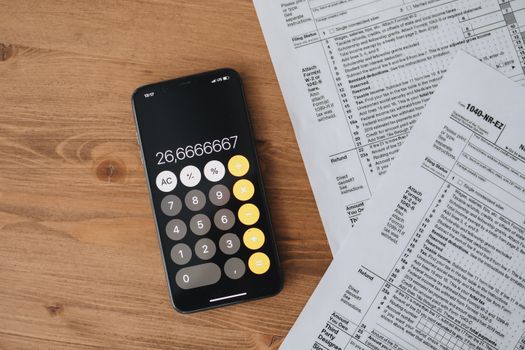
The deduction itself isn't complicated. The friction lives in the record keeping, which is exactly where a shoebox of receipts and a vague memory start costing you money. Lodgya's free WFH calculator works through the 70 cents per hour maths so you can see the number before you lodge, and the personal tax tracker keeps receipts, deductions and work-related expenses in one browser-based spot that produces a clean report for your accountant. Your data stays yours, and the free tier covers the first handful of entries if you just want to test the water.
For the 2025-26 income year, the fixed rate is 70 cents for each hour you work from home. Multiply your total hours by 0.70 to get the deduction. Someone working 20 hours a week for 48 weeks would claim $672. Keep a record of your hours as you go so the figure holds up if it's reviewed.
No. The 80 cent shortcut method only covered two limited windows, from 1 March to 30 June 2020 and from 1 July to 31 December 2020. For the 2024-25 and 2025-26 income years the rate is 70 cents per hour under the revised fixed cost method, or you can claim actual expenses instead.
It depends on your setup and your records. The fixed rate is simpler and needs hours worked rather than bills. Actual expenses can pay more if you have a dedicated workspace, high energy costs, or equipment you're depreciating, but it requires bills and a clear basis for the work-related percentage. Run both numbers before deciding.
At minimum, a record of the hours you worked from home, such as a diary, roster or timesheet kept as you go. If you claim equipment, keep the receipts. If you use the actual expenses method, keep the bills and your work-use percentage calculation. Check the ATO's current record keeping guidance for your income year.
The 70 cents per hour rate is confirmed for the 2024-25 and 2025-26 income years. Rates do change, so confirm the figure on the ATO website before you lodge a return for 2026-27. If the rate has moved, your deduction should be calculated using whatever applies for that year.
The ATO's fixed rate is 70c for every hour you work from home. It covers power, internet, phone and stationery.
The cents per km method covers all your car costs for up to 5,000 work km per car. Normal home-to-work travel doesn't count.
See how much tax a deduction could save you, based on your taxable income before the deduction.
Rough estimates only, using ATO rates as at October 2026. Not tax advice.
Lodgya tracks your income, deductions, receipts, work-from-home hours and car trips all year, then gives you a clean report at tax time.