17 Oct 2026
Tradie Office Jobs From Home: Quotes, Invoicing and Scheduling
Quotes, invoicing and job scheduling are tradie office jobs you can do from home. See what these roles involve and how to land one.
What records to keep for tax, how the five year rule works and where to store everything, explained for Australian individuals and businesses.
8 min read
🧮 See how much tax a deduction saves you ↓
Most people who end up stressed about their tax return are not stressed because they claimed something dodgy. They are stressed because they cannot find the paperwork that proves what they claimed. Record keeping for tax is the boring part that decides whether lodgment day is a twenty-minute job or a three-week scramble through bank statements and a shoebox of faded receipts. The good news is that the rules are simpler than most people expect, and once you have a system in place, keeping records takes a few minutes a week instead of a weekend every July.
Individual taxpayers generally need to keep records that support both the income and the expenses that appear in their tax return. That is the whole point of the exercise. Your records are what stands behind the numbers you type into the form, and they are what you would pull out if the ATO ever asked how you arrived at a figure. Record keeping is consistently framed as part of audit readiness and ATO compliance, which is a tidy way of saying that tidy records make an enquiry a paperwork exercise rather than a panic.
For businesses in Australia, keeping records of all business transactions is not optional housekeeping. It is a legal requirement, and those records are what support the information you supply to the ATO in your returns and reports.
The detail changes depending on whether you are a PAYG employee, a sole trader, or running a company, but the shape of it does not. You need evidence on both sides of the ledger: money coming in and money going out. If your situation is unusual, or you are not sure how a particular transaction should be documented, check the ATO's own guidance or ask a registered tax agent before you file.
These are the documents that show what you earned during the financial year. Depending on how you earn, that might be payslips, income statements, invoices you issued, or bank records showing payments landing in your account. The test to apply is simple: if someone asked you to prove this amount, could you? If the answer is no, the record is missing.
These are the documents behind anything you claim as a work-related or business expense. Receipts, invoices, statements and logbooks all live here. Again, the standard is whether the paperwork lets you demonstrate the expense and how it relates to earning your income. If a claim cannot be supported by a record, leaving it out of the return is usually the safer call.
Generally, individual taxpayers need to keep their records for five years from the date they lodge their tax return. That is the rule described across ATO guidance and independent accounting commentary, and it applies to the records that support your return, not just to the return itself.
This trips up a lot of people. The five-year period is measured from the date you lodge, not from the end of the financial year and not from 30 June. If you lodge your return late, the retention period shifts out accordingly. So a return lodged well after the end of the income year needs to be kept for longer than the same return lodged on time. Whenever you are clearing out old paperwork, that lodgment date is the one to work from.
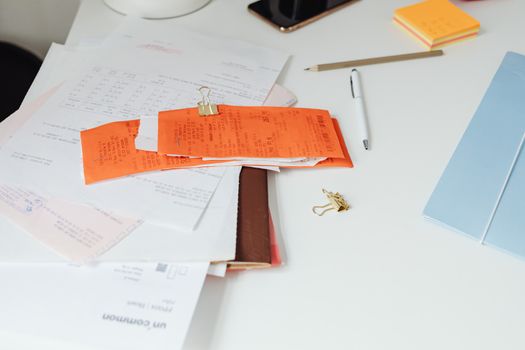
For individuals, records supporting a tax return can be kept in either paper or electronic form. There is no rule forcing you into filing cabinets, and there is no rule forcing you into the cloud. What matters is that the record exists, is readable, and can be produced if needed. From a practical standpoint, digital copies are easier to search, easier to back up, and much harder to lose than a plastic bag of receipts. Some people keep paper originals for anything that feels important and scan the rest, which is a reasonable compromise.
Storage is less about the specific tool and more about a few habits that make records usable when you need them:

There is a real difference between what an employee needs to keep and what a business needs to keep, and it is worth knowing which side you fall on.
| Aspect | Individuals | Businesses |
|---|---|---|
| What the records cover | Income and expenses that appear in the personal tax return | All business transactions, tied to tax, super and employer obligations |
| How it is framed | Records that support and verify claims made in the return | A legal requirement to keep records supporting what is reported to the ATO |
| Retention period | Generally five years from the date of lodgment | Not specified in the sources reviewed here, so confirm the current requirement with the ATO or your agent |
| Format | Paper or electronic | Businesses can manage their own record keeping |
| Help available | Tax agent or ATO guidance | Records can be managed in house or by a registered tax or BAS agent |
Most record keeping failures are not decisions. They are drift. A receipt goes in a pocket, then a drawer, then a bag, and by tax time nobody knows what it was for. A short routine removes most of that risk:
Businesses can look after their own record keeping or engage a registered tax or BAS agent to do it. The ATO also publishes a Record keeping evaluation tool through its small business information site, which is designed to help businesses work out what their record keeping requirements actually are. There is also ATO guidance on the common record-keeping and reporting tasks businesses need to complete to meet their tax, super and employer obligations. If you are unsure what applies to you, these are the places to start rather than a forum thread from five years ago.

Lodgya is a browser-based income and expense record-keeping tool built in Melbourne by founder Omar Mulabegovic, aimed squarely at the shoebox-of-receipts problem. It offers three paid trackers: a Property tracker for receipts, recurring transactions, depreciation under Div 40 and Div 43, and accountant-ready PDF reports; a Personal tax tracker for deductions, receipts and work-related expenses; and a Business and sole trader tracker covering a mileage logbook, GST and BAS reconciliation and CSV import. There is a free tier with 10 entries, then Personal at $4.95 a month and Pro at $9.95 a month, alongside free ATO-focused calculators, guides and a tax calendar. Lodgya is not tax advice and is not a registered tax agent, so anything uncertain should still go to the ATO or your accountant.
Generally, individual taxpayers need to keep their records for five years from the date they lodge their tax return. The five-year period runs from lodgment, not from the end of the financial year or from 30 June. If you lodge late, the retention window shifts out to match, so note your lodgment date before you throw anything away.
Yes. Records supporting an individual tax return can be kept in either paper or electronic form, so a well-organised cloud folder is just as valid as a filing cabinet. The important thing is that the record exists, is legible, and can be produced if the ATO asks about a claim. Back up anything digital.
Businesses are in a different position. Keeping records of all business transactions is a legal requirement, and those records support what you report to the ATO across tax, super and employer obligations. Businesses can manage this themselves or engage a registered tax or BAS agent. The ATO's Record keeping evaluation tool is a useful starting point for working out what applies.
The sources reviewed here do not set out specific penalties, so it is best to check the current position with the ATO or a registered tax agent rather than rely on second-hand figures. What is clear is that records are what support and verify your claims, so missing paperwork makes a claim much harder to stand behind if questions are asked.
Start with the current financial year. Set up one folder, deal with new receipts as they arrive, and work backwards through older bank statements in small batches. Records must be kept for five years from lodgment, so anything inside that window still matters. If the backlog is large, a registered tax agent can help you reconstruct what is needed.
The ATO's fixed rate is 70c for every hour you work from home. It covers power, internet, phone and stationery.
The cents per km method covers all your car costs for up to 5,000 work km per car. Normal home-to-work travel doesn't count.
See how much tax a deduction could save you, based on your taxable income before the deduction.
Rough estimates only, using ATO rates as at October 2026. Not tax advice.
Lodgya tracks your income, deductions, receipts, work-from-home hours and car trips all year, then gives you a clean report at tax time.