17 Oct 2026
Sole Trader Tax Deductions 2026-27: Practical ATO List
A practical list of sole trader tax deductions for 2026-27, covering vehicle, home office, travel and running costs, plus the records the ATO expects.
Quotes, invoicing and job scheduling are tradie office jobs you can do from home. See what these roles involve and how to land one.
9 min read
🧮 Try our work from home calculator ↓
The tools go back in the ute, the site gate closes, and then the second shift starts. Quotes need writing, invoices need sending, and tomorrow's jobs need shuffling around a calendar so three customers are not told to expect someone at 8am. That second shift is office work, and it does not need a shed, a shopfront or a desk at the yard. A spare room, a laptop and a decent internet connection will do it.
For tradies who want to step off the tools, for partners who already run the books, and for anyone hunting a work from home office job with a trade flavour, quoting, invoicing and scheduling are the three tasks that keep money moving. This is what those roles involve, what employers and clients expect, and how to land one.
The admin side of a trade business is almost entirely screen based. It means answering enquiries, measuring a job from photos and descriptions, pricing materials and labour, sending a quote, following it up, booking a date, sending a reminder the day before, invoicing on completion, and chasing the ones that sit unpaid.
None of that requires standing on a roof. It requires knowing how long a job takes, what materials cost, and how to write clearly enough that a customer says yes without needing a site visit. That knowledge is exactly what an experienced tradie already has, which is why so many people move from the tools into the office chair without leaving the industry.
Sole traders usually do this work at night after a full day on site. Growing trade businesses often hand it to someone else, and that someone else increasingly works remotely. Australian job boards reflect that shift. SEEK lists more than 24,000 work from home jobs nationally, and separate searches return over 1,400 home office jobs in Sydney, around 870 work from home jobs in Queensland, and 147 remote work at home roles in Melbourne. Counts move daily, so check the boards directly for current figures.
It helps to see how much of this work is advertised as remote rather than tied to a head office. The listings below are a snapshot of what Australian job boards were showing across several searches, and they are worth verifying yourself because postings turn over fast.
| Search | Advertised roles |
|---|---|
| Work from home jobs, Australia | 24,178 on SEEK |
| Home office jobs, All Sydney NSW | 1,444 |
| Work from home back office jobs | 545 on Indeed |
| Remote work from home jobs, New South Wales | 585 on Indeed |
| Work from home office jobs, Greater Sydney Area | 378 on LinkedIn |
| Remote and work from home jobs, Australia | 85 on Ethical Jobs |
Trade-specific admin roles sit inside those totals rather than in a category of their own. Searching for scheduler, estimator, service coordinator or accounts administrator alongside a trade term such as plumbing, electrical, building or landscaping usually surfaces more of them than searching for "tradie office job".
Almost every tradie office role is built from the same three blocks. The size of the business decides how much of each one you handle and how much of it is automated.
Quoting is the highest value of the three, because a badly priced quote costs the business money on every job. A remote estimator reads an enquiry, works out labour hours, checks material costs, adds margin, and writes it up so the customer understands what is included and what is not.
Good quoting from home relies on good information coming in. Photos of the existing setup, rough measurements, access notes and a couple of clear questions close most of the gaps. If something is unclear, say so in the quote and list it as an exclusion rather than guessing. Once the quote goes out, follow it up. A short phone call or message a few days later converts more work than most people expect.
Invoicing looks simple until cash flow tightens. A remote accounts person raises invoices as jobs finish, attaches the right paperwork, checks the amounts against the accepted quote, and keeps a list of what is owed and how long it has been owed.
Trade customers vary. Some pay on the day, some wait for a statement, and some need a nudge. A polite, consistent follow-up routine beats an angry phone call every time, and having every invoice and receipt stored in one place makes the conversation much easier. This is also the part of the job where tidy record keeping pays off at tax time.
Scheduling is problem solving all day. You are matching the right person, with the right skills and the right parts, to the right job, in a sensible order that cuts travel time. Then someone calls in sick, a job runs three hours long, and the whole day is rebuilt.
Done remotely, this role runs on a calendar, a phone and clear notes. The job is to protect the tradies on the road from interruptions, confirm appointments with customers the day before, and flag anything that needs a decision before it becomes a complaint.
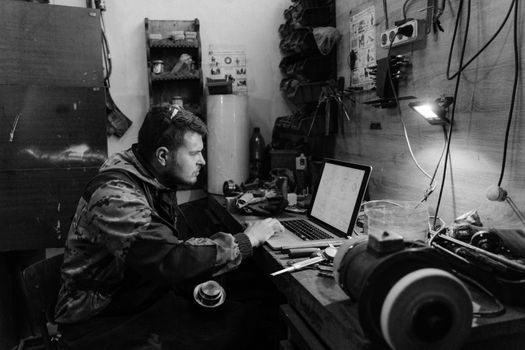
You do not need to be a licensed plumber or electrician to coordinate their work, though trade knowledge makes you faster at pricing it. What employers and clients actually look for is plain English writing, solid numeracy, comfort with scheduling and invoicing software, and the patience to deal with anxious customers.
It also helps to understand trade vocabulary. Knowing the difference between rough-in and fit-off, or between a supply-and-install price and a labour-only price, means fewer questions back and forth and quotes that do not need rewriting.

There are two very different versions of this job, and they suit different people. One pays a wage, the other pays whatever the business earns.
| Remote admin for a trade business | Admin for your own trade business | |
|---|---|---|
| Who sets the workload | An employer or business owner | You, and the customers who call |
| Main tasks | The tasks you are hired for, often one of quoting, invoicing or scheduling | All three, plus marketing and supplier accounts |
| Income | Regular, agreed hours | Depends on how many jobs you win and finish |
| Biggest pressure | Keeping a busy schedule running calmly | Cash flow when invoices sit unpaid |
Many people start with the second and move to the first, or run both at once by doing the books for their own business in the morning and someone else's in the afternoon.
Working from home does not change the basics of Australian tax, but it does mean keeping decent records. If you are running your own trade business, or working as a contractor for one, that means tracking income and expenses, holding on to receipts, keeping a logbook for the vehicle, and staying on top of GST and BAS obligations if you are registered.
A tool like the Lodgya business and sole trader tracker is built for exactly this. It handles mileage logs, GST and BAS reconciliation, and CSV imports, which means the paperwork is ready to hand to an accountant rather than being reconstructed from a shoebox at the end of the year. Lodgya also offers free calculators, including a work from home calculator and a car logbook tool, plus a tax calendar. Lodgya is not a registered tax agent and this is not tax advice, so confirm your own situation with the ATO or a professional.

Not strictly, but it helps a lot. Without trade background you will be slower at estimating labour hours and checking material lists, so expect a learning curve on your first few quotes. Some employers are happy to train the right person on the software and the pricing rules. Customer service, numeracy and organisation matter just as much as knowing the difference between a fit-off and a rough-in.
It scales with the business. A solo operator might spend a few hours a week quoting and invoicing, while a small team with steady work can need most of a working day, every day, just keeping the schedule straight and the invoices moving. If you are being hired remotely, agree the hours in writing and check whether you are expected to answer calls outside them.
Most trade businesses run some combination of a scheduling tool, an invoicing or accounting platform, shared cloud storage and a calendar. You do not need to have used the exact product before, but you should be able to learn a new one quickly. Familiarity with spreadsheets and with logging receipts digitally will cover a lot of ground in an interview.
Many trade businesses engage remote admin help as contractors, and others hire employees, so the arrangement varies. What matters is that the working relationship is set up correctly from the start, because it affects tax, super and insurance. Get advice from the ATO or an accountant about which structure suits your situation before you sign anything.
It can be, provided the information coming in is good. Ask for photos, approximate measurements, site access details and clear answers about what the customer wants. Where something is uncertain, list it as an exclusion or a provisional item in the quote instead of guessing. A well written quote with clear terms is more accurate than a rushed on-site estimate.
The ATO's fixed rate is 70c for every hour you work from home. It covers power, internet, phone and stationery.
The cents per km method covers all your car costs for up to 5,000 work km per car. Normal home-to-work travel doesn't count.
See how much tax a deduction could save you, based on your taxable income before the deduction.
Rough estimates only, using ATO rates as at October 2026. Not tax advice.
Lodgya tracks your income, deductions, receipts, work-from-home hours and car trips all year, then gives you a clean report at tax time.